

Why Loss-Informed
Leadership & Leading Difficult Conversations Belong in Every Organization
Grounded in Emotional Professionalism.
Proven by Data.
Every organization will face moments that fundamentally test leadership:
The death of an employee, a serious incident connected to the workplace, or the responsibility of delivering difficult news such as layoffs, restructuring, or sudden organizational change. These moments are emotionally charged, high-stakes, and deeply sensitive, and when they are mishandled, avoided, or met with silence, trust erodes, engagement drops, and organizational risk increases.

The Data is Clear
-

Grief-related lost productivity is estimated to cost U.S. employers approximately $75 billion annually.
-

37% of employees report being impacted by the death of a family member or close friend, yet only 22% say they felt supported at work.
-

74% of bereaved employees report a negative impact on their work, and 79% report increased intent to leave.
Sources: Workplace mental health research; Empathy / MetLife, The Grief Tax 2025
Loss directly influences how people think, communicate, and perform. Leaders who are unprepared often default to silence, mixed messages, or avoidance, creating avoidable harm to people, culture, and credibility.
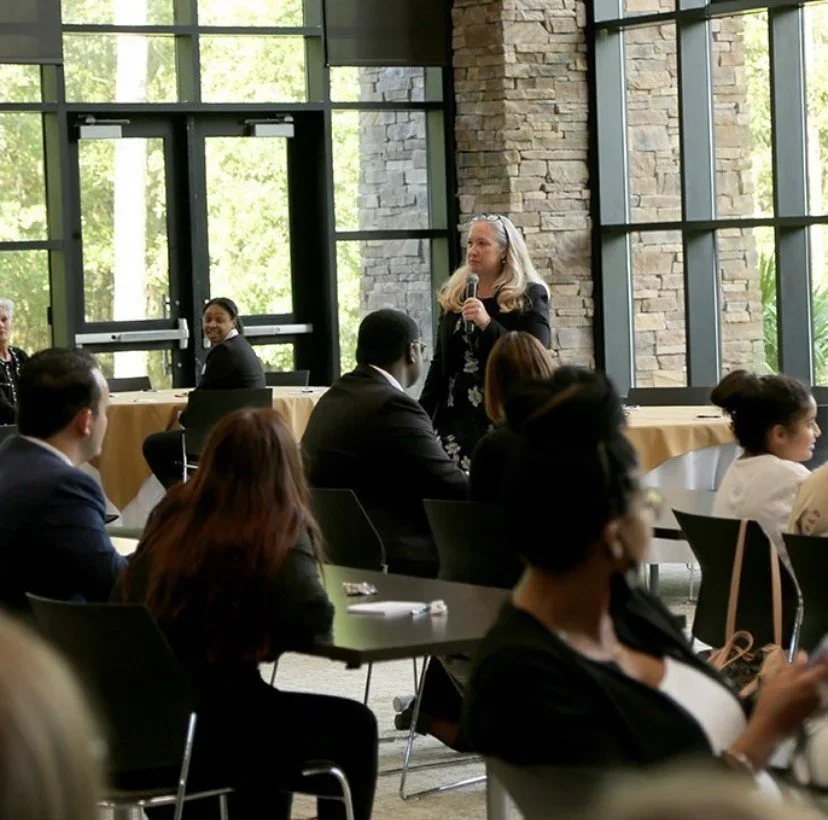

The Leadership Imperative
Today’s HR leaders and executives are no longer gatekeepers of policy alone; they are stewards of trust. Loss-informed leadership is not therapy at work. It is the ability to lead with clarity, boundaries, and professionalism when loss is present.
What leaders do in the first 3–5 minutes after receiving hard news can make or break trust.


Martha Thayer
For over 30 years, Martha Thayer has helped leaders navigate the moments no one is prepared for—yet everyone will face. She is a nationally recognized educator, consultant, and speaker with deep experience in organizational leadership, higher education, and high-consequence professional environments.
Martha is an Emeritus Professor of Mortuary Science and the founder of Mortuary Training, LLC, where she has spent decades educating professionals who operate in emotionally charged settings where communication errors have lasting consequences.
Drawing from her background in mortuary science education, organizational leadership, and professional training, Martha equips leaders and HR professionals with repeatable playbooks for the moments that matter most, providing clear language, boundaries, and decision-making guidance without turning leaders into counselors or adding policy burden.
Her expertise has been sought by national organizations, regulatory bodies, and professional associations, and her work has been featured in national business and media outlets, including The Wall Street Journal and CNBC, where she has provided insight on workforce dynamics, leadership decision-making, and organizational response during high-stakes moments.

Signature Talks
Leading Through Loss:
The HR Response No One Trains For
When an employee dies, leaders and HR professionals are suddenly responsible for one of the most emotionally charged and sensitive moments of their careers, yet almost no one is trained for it. This fast, tactical session provides a repeatable playbook for what to say, do, write, and give in the first hours and days following a workplace death.
Participants leave with clear leadership actions—not theory—and a structured approach for revisiting existing practices, refining them with intention, and practicing the response before it is ever needed.
Leading in the Presence
of Loss
Loss is a constant presence in today’s workforce, most often through the death of someone close to an employee or serious life-altering circumstances outside the workplace. This session examines how unacknowledged loss affects performance, communication, and retention, and what leaders can do in response.
Leaders gain practical guidance for how to say, do, write, and give in the presence of ongoing loss, using a repeatable leadership approach that supports teams while preserving boundaries, professionalism, and operational clarity.
The Result for Organizations
Leaders communicate with clarity, compassion, and professionalism
Trust is protected during sensitive moments
Retention stabilizes and disengagement decreases
HR, executives, and people leaders feel equipped, confident, and grounded
Because people remember how leadership shows up—and so does the culture.

Ideal For:
HR teams, executive leadership, people managers, employee-experience and DEI leaders, associations, and organizations navigating change.